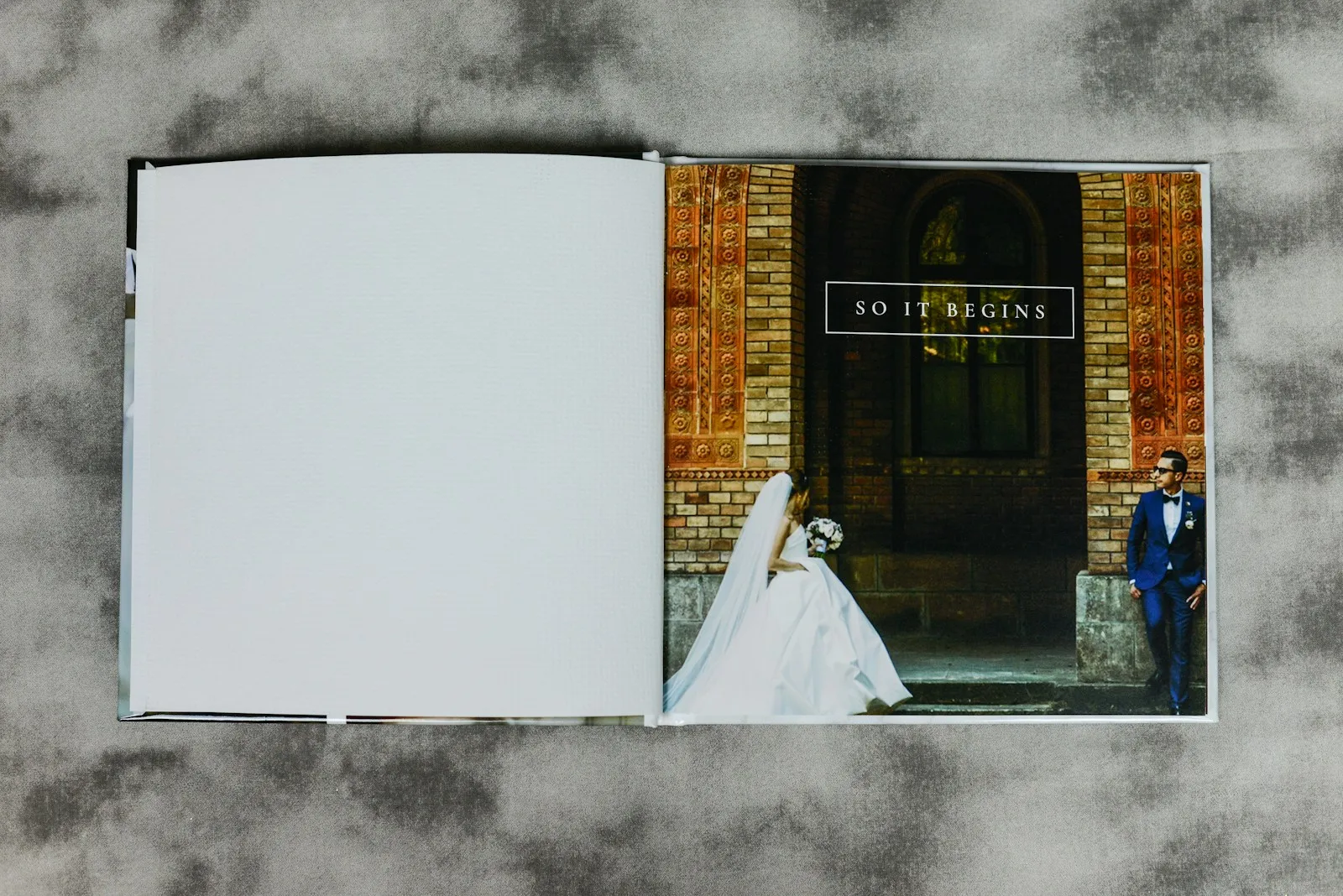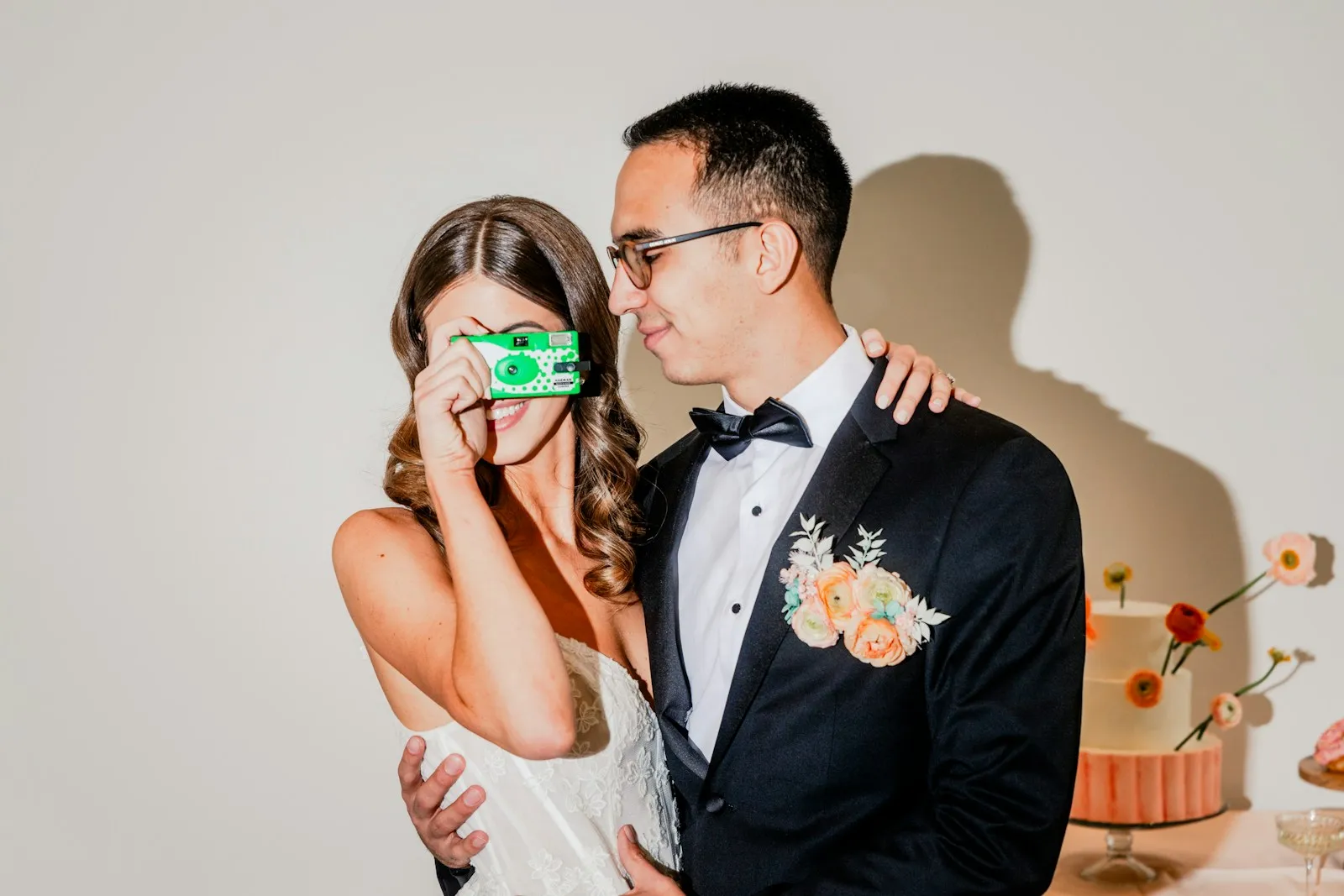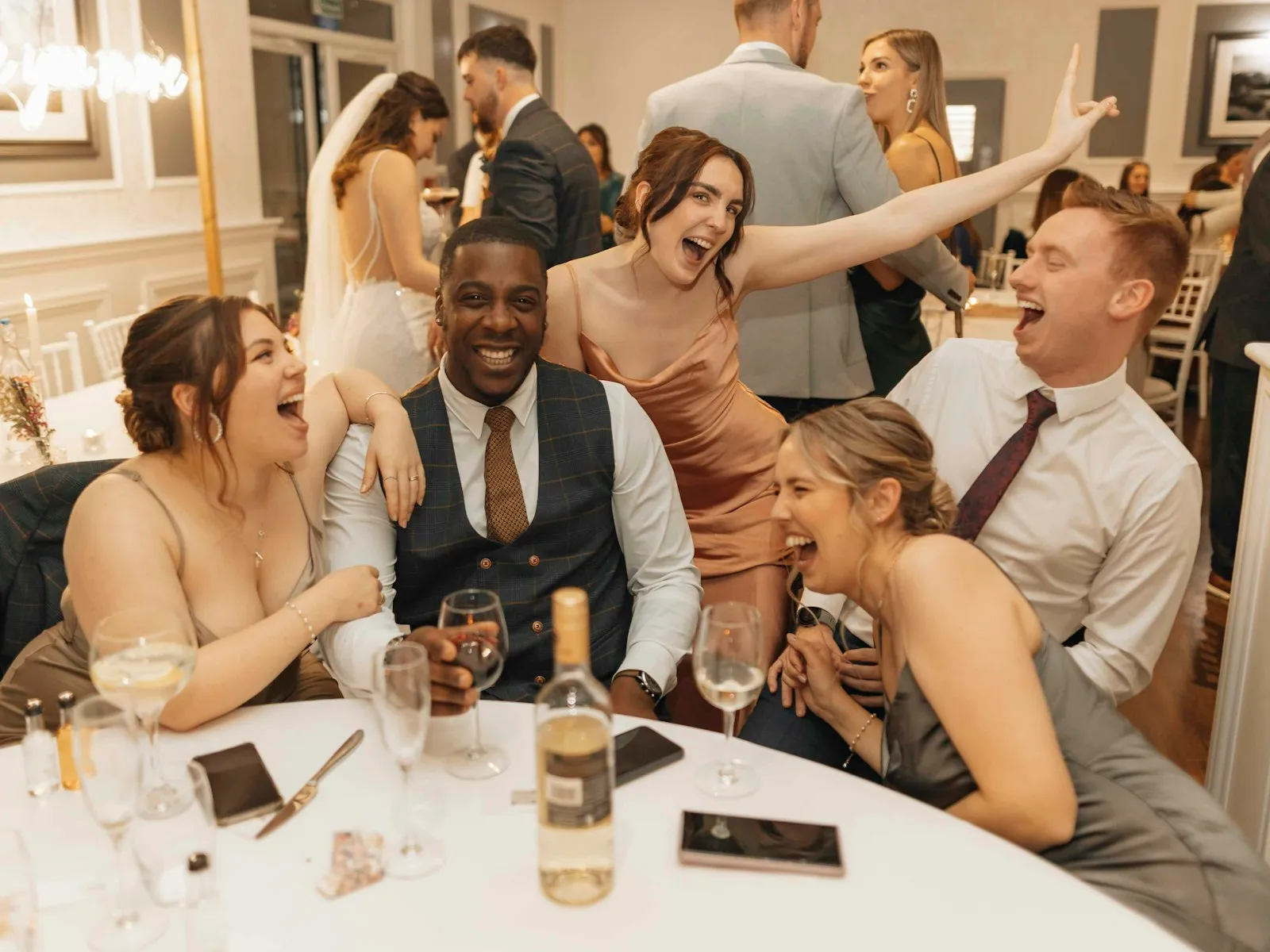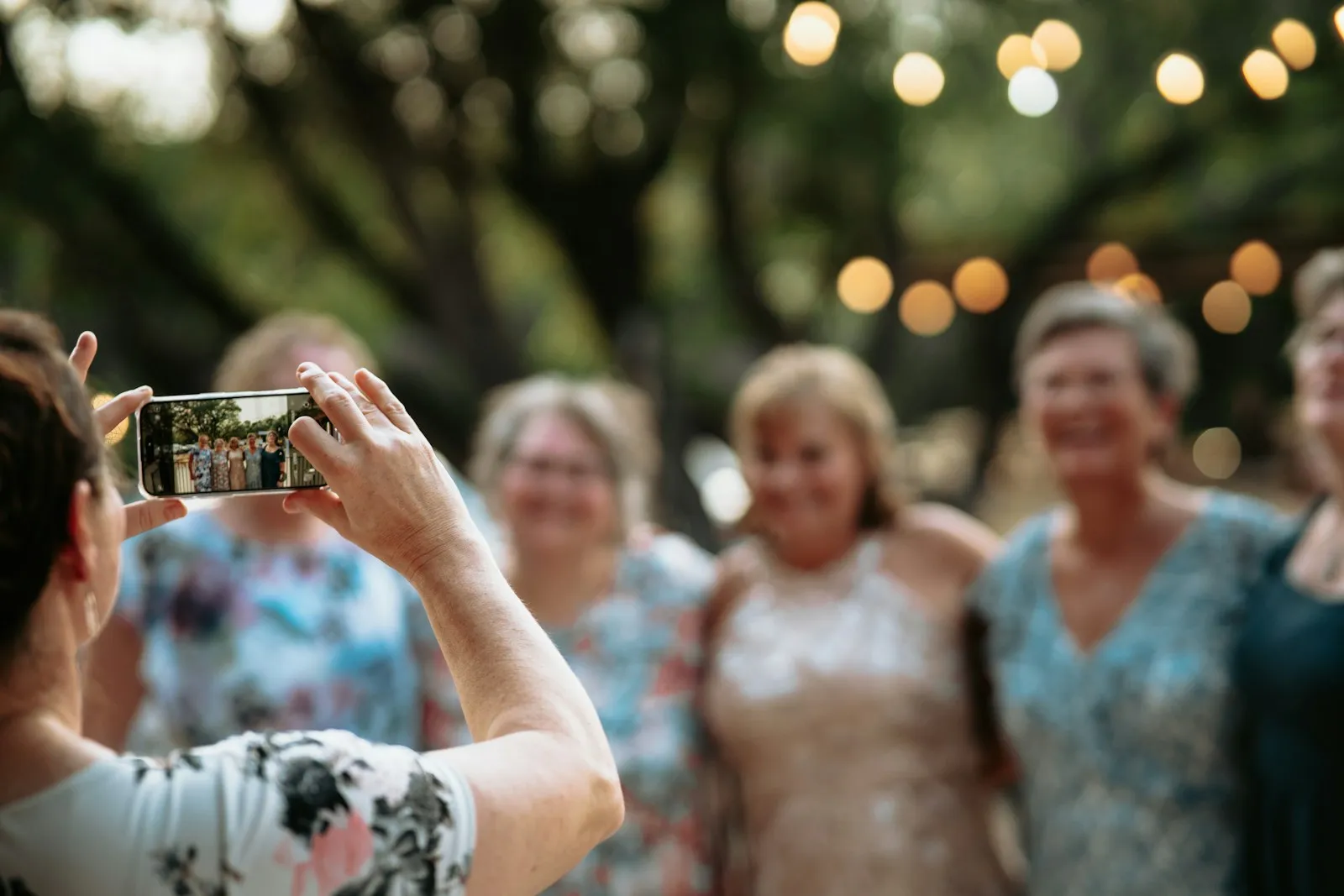
Candid wedding photos come from three things: a photographer who knows to stay unobtrusive, a schedule that leaves unstructured time, and guests who are free to take their own pictures. Plan for all three rather than relying on one.
1. Brief your photographer
Tell your photographer you want fewer posed groups and more observation. Give them a short list of people to prioritize and a list of moments (grandparents' reactions, a sibling's toast). Keep the family group list small and assign someone to gather people.
2. Leave unstructured time
Candid moments need time without a schedule. Build in a longer cocktail hour and a buffer around the toasts. See our sample reception timeline.
3. Let guests shoot, with a limit
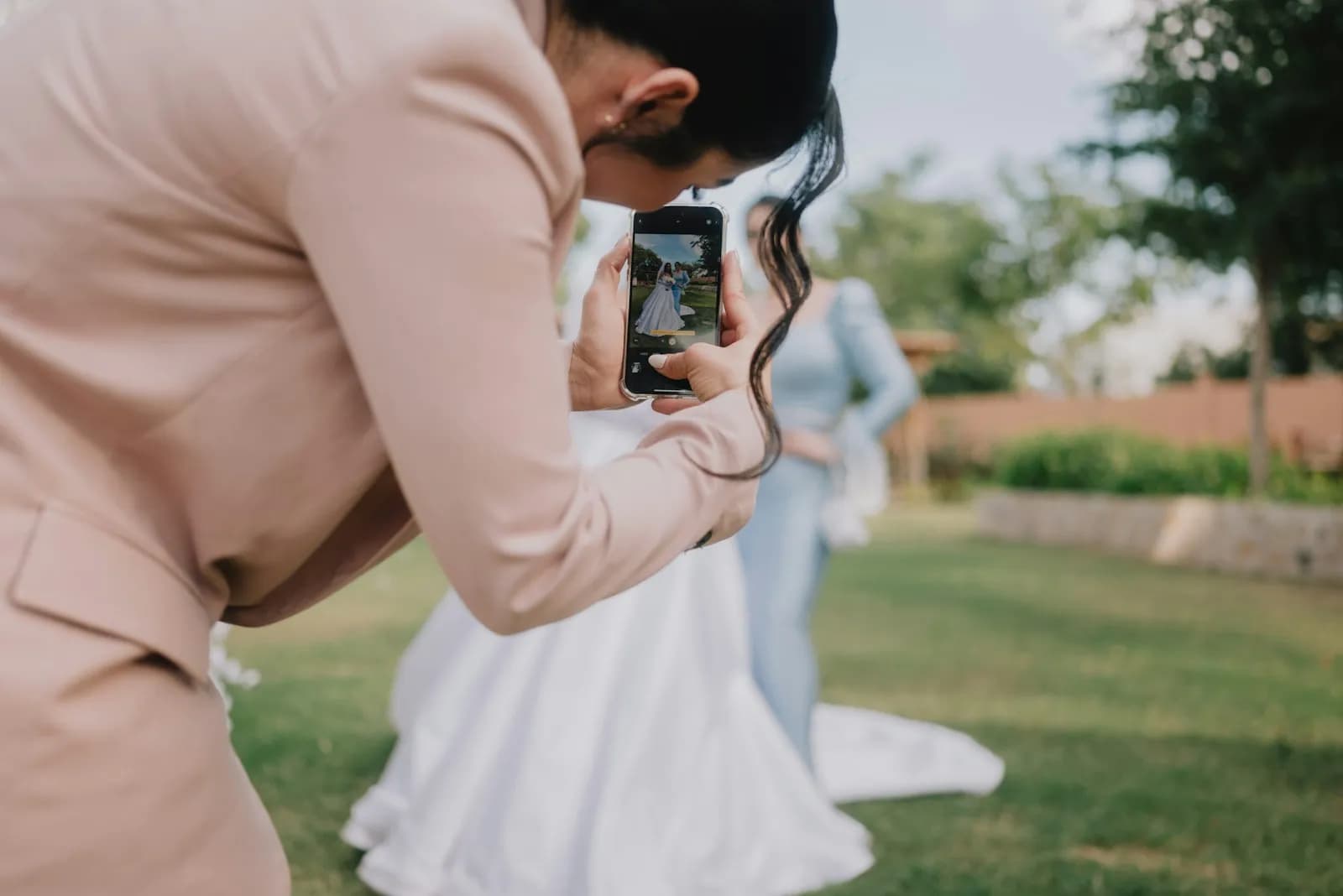
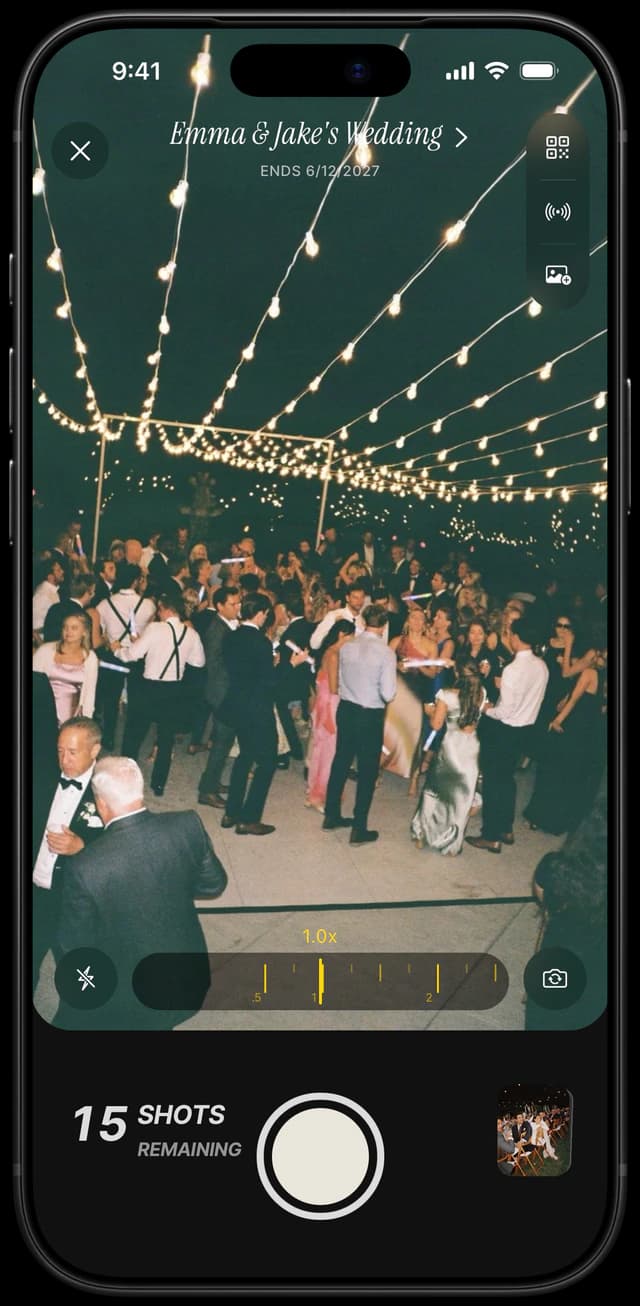
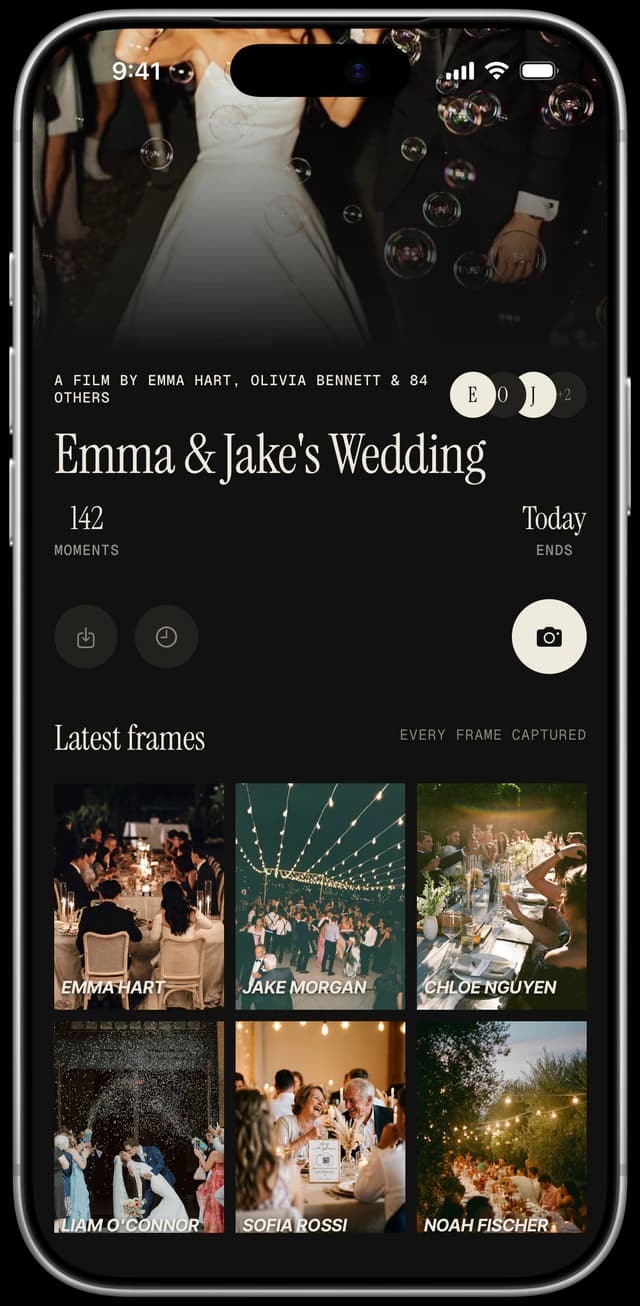
Guests see angles a photographer cannot, because they know the people. A QR code on each table opens a shared camera, so guests contribute candids without an app. A shot limit (Evershots defaults to 48 per guest, adjustable) makes people pick their moments, and a hidden roll keeps them in the room.
4. Design for movement
Open sightlines, a dance floor that is not in a corner, and good evening light help everyone's photos. Natural light for the first hour, warm lamps after.
5. Add gentle prompts
A short card with prompts such as a toast or the oldest guest on the floor turns phone time into participation. Try our scavenger hunt prompts.
What to put in your photographer brief
A one-page brief works better than a long conversation. Include:
- ·Five people to prioritize. For example, both sets of parents, the grandparent who traveled farthest and your closest friend.
- ·Five moments you do not want to miss. Not poses, moments: a father seeing you for the first time, the first look at the venue, a grandparent laughing at a toast.
- ·What you do not want. If you dislike staged ring shots or long group photos, say so now.
- ·A cap on formal groups. Many couples limit the family list to a handful of combinations so cocktail hour is not spent lining people up.
Ask how many hours of coverage you get and whether a second shooter is included. A second shooter often turns a good candid set into a great one, because one person is always free to watch guests while the other follows you.
Build candid time into the schedule
Candid photos need space. If the day is packed with formal events, there is nowhere for natural moments to happen. Three scheduling changes help:
- ·A longer cocktail hour, so guests mingle while the photographer circulates.
- ·A buffer of ten minutes around toasts, so reactions are not rushed.
- ·Golden-hour time with just the two of you. Check the sunset time for your date and plan about 15 minutes outside, away from the crowd.
Our reception timeline shows where to fit these.
Light matters more than gear
Candid photos fail most often because of bad light. Seat guests facing windows or open sky where you can, avoid placing the dance floor under a single harsh overhead light, and use warm lamps or string lights in the evening. Tell your photographer if the room is dark so they can plan lighting, and ask guests to turn their phone flash off, since flash flattens faces and spoils everyone else's shots.
Let guests help, with limits
Your guests know who matters to whom. They will photograph the aunt crying at the vows or the cousins behind the cake. A QR code on each table opens a shared camera on their phone. With Evershots, each guest has a shot limit (48 by default, and the host can change it), which makes people pick their moments instead of firing off a hundred frames. You can keep the roll hidden until a reveal you choose, so guests stay in the room instead of looking at their phones.
For a wedding of 100 to 150 guests, a lower cap such as 24 to 36 keeps the roll easy to scroll afterward. For under 50 guests, the default is generous.
Ask guests to help, not to perform
A short line on the table card does more than an announcement: "Take a few frames of what you see." Do not hand guests a shot list. The scavenger hunt is optional, and many guests will ignore it, which is fine.
Unplugged ceremony or not?
Some couples ask guests to put phones away during the ceremony so the photographer has a clear view and guests are present. Others like the idea of guests capturing it. If you go unplugged, say so on the program and have the officiant mention it once. Then invite everyone to take photos from the moment you walk out.
After the wedding
Ask your photographer when to expect the gallery and how many edited images you will receive. Compare the guest roll with the professional set: guests often catch the moments the photographer missed, and the photographer catches the technical shots guests cannot. Export the guest roll and back it up. See how to organize wedding guest photos.
FAQ
How many posed photos should we ask for?
Fewer is better. Keep the family list short, and let the rest of the day be candid.
Can guest photos replace a photographer?
We wouldn't rely on them for the ceremony or portraits. They add coverage, not a replacement.